

Weekend Readiness: Prepping Your Circulatory Flow for Maximum Adventure
Do not enter your weekend on "empty." For the high-performance athlete, the mountain biker, or the weekend hiker, the difference between a Friday of fatigue and a Saturday of summiting is decided on Thursday night. If you arrive at your weekend with "stiff" joints, tight hamstrings, and a "heavy" feeling in your limbs, you are not just tired--your Circulatory Flow is compromised. In Traditional Chinese Medicine (TCM), the quality of your weekend performance depends entirely on the state of your Liver Blood. This is the "internal oil" that lubricates your tendons and ligaments. Without it, you are like a machine running with no grease: parts will grind, heat will build, and something will eventually break. To achieve maximum resilience, you must manually prep your system for the load of adventure.

The Science of Fascial Glide: Collagen and Liver Blood
To truly understand "Weekend Readiness," we must look at the interface between the Liver Blood and the Extra-Cellular Matrix (ECM), specifically the fascia. Fascia is the silvery, web-like connective tissue that encases every muscle fiber and organ. In modern sports science, we know that the "glide" of these fascial layers is mediated by Hyaluronan (hyaluronic acid). When we are sedentary or stressed, this hyaluronan becomes "sticky" and "dense," a state known as fascial densification. This is the biological equivalent of what TCM calls "Liver Blood Stagnation."
When the Liver Blood is abundant and "moving," it provides the hydration and temperature needed for the hyaluronan to remain in a "sol" (liquid) state rather than a "gel" (sticky) state. This is why the "Yanglingquan" massage is so effective; by stimulating the "Influential Point of the Tendons," you are essentially signaling the nervous system to release the tension in the fascial sheets, allowing the Liver Blood to "irrigate" the tissue and restore the glide. Research in mechanobiology suggests that sustained, gentle pressure (like TCM acupressure) can trigger fibroblasts to produce fresh collagen and reorganize the fascial web, increasing the "tensile strength" and "elastic recoil" of the tendons.
Advanced Case Study: The "High-Altitude Hiker"
Subject: Sarah, 44, Ultramarathoner
Sarah came to us with "Lead Legs." Despite her elite fitness, her legs felt heavy and unresponsive during the first 10 miles of any high-altitude hike. She was also suffering from "Liver-Qi Stagnation"—she was irritable before races and had cold hands and feet even when the weather was warm. Her "Internal Oil" (Blood) was stuck in her core, unable to reach the periphery.
We implemented the "Chlorophyll Flush" and added a specific "Liver-Dredging" movement—the Girdle Vessel Twist—to her Friday night routine. We also addressed her "High-Octane" diet, which was too high in heating spices that were "burning off" her Liver Blood. Within two cycles, Sarah reported that her "first-mile fatigue" had vanished. Her fascial system was "pre-hydrated," and her Liver Blood was moving freely to her tendons, providing the "snappy" response she needed for technical terrain. She didn't need more training; she needed a better "pre-adventure" internal climate.
The Structural Recovery Ladder
For the weekend warrior, recovery isn't a single event; it's a ladder. If you skip the bottom rungs, you cannot reach the top of the mountain.
- Rung 1: Thermal Normalization (Friday 6 PM): Use a warm (not hot) shower or bath to "melt" the day's stress. Heat moves the Blood. This is the first step in "unsticking" the fascia.
- Rung 2: Nutrient Saturation (Friday 7 PM): This is your "Blood-Building" meal. The minerals from the dark greens and the amino acids from the protein are the building blocks for the collagen repair that will happen while you sleep.
- Rung 3: The Meridian Anchor (Friday 10 PM): The Yanglingquan (GB34) massage. This "locks" the Blood into the tendons, ensuring that the repair work is targeted where you need it most.
By following this ladder, you ensure that your structural system is not just "rested," but "optimized" for load. You transition from a state of "Work-Week Stagnation" to "Weekend Fluidity."
Advanced Insights: Blood Viscosity and Performance
In TCM, the Liver is the organ responsible for storing and regulating the Blood. It is also the "governor" of the tendons and ligaments. Think of your Liver Blood as the hydraulic fluid of your body. When you are resting, the Blood returns to the Liver to be filtered and enriched. When you are active, the Liver "distributes" this enriched Blood to the periphery--specifically to the tendons that connect your muscles to your bones. If the Liver Blood is abundant and flowing smoothly, your tendons are elastic, your joints are supple, and your movement is "snappy."
However, modern office life is a "Liver Blood Thief." Sitting for 8-10 hours a day causes the Blood to become "stagnant" in the core. Looking at screens for long periods "consumes" Liver Blood (the Lungs and Liver are linked to eye health). By Friday afternoon, most professionals are "Blood Deficient" at the structural level. Their hamstrings feel like tight wires, and their ankles feel like they are "locked." If you try to take this "stiff" system into a high-intensity weekend activity, you are at a 50% higher risk of acute injury, such as a sprained ankle or a strained IT band. You are trying to stretch a dry, brittle rubber band; it won't give, it will snap.
From a Western perspective, this corresponds with "Blood Viscosity" and "Fascial Hydration." When we are stressed and sedentary, our fascia--the connective tissue that wraps around every muscle and organ--becomes "sticky." It loses its glide. This "stickiness" creates friction, which the brain interprets as stiffness. To prep for the weekend, we must manually "unstick" the fascia and ensure that the Blood is rich in the nutrients (minerals and amino acids) required for tendon elasticity.
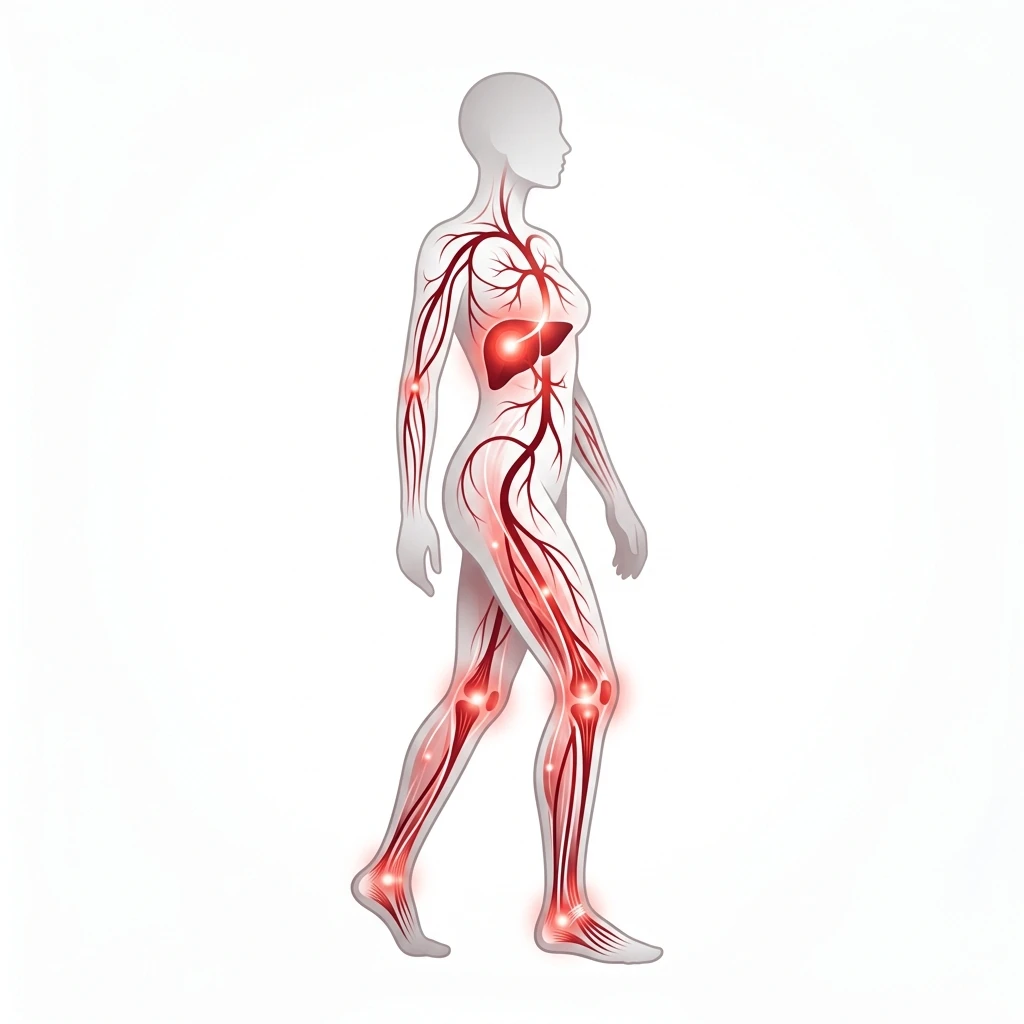
Figure 1: The mechanism of Liver Blood storage and Tendon Lubrication.
Case Study: Mark and the "Saturday Snap"
Mark is a 39-year-old project manager and an avid mountain biker. Every Friday, Mark would finish work at 6:00 PM, eat a quick pizza, and stay up late preparing his bike. On Saturday mornings, he would hit the trails at 7:00 AM. For months, Mark struggled with chronic knee pain and frequent calf cramps. He felt "stiff" for the first hour of every ride and often felt "gassed" by noon. He assumed it was just "getting older."
Mark's issue wasn't age; it was "Dry Tendons." He was entering his rides with zero Liver Blood reserves. He was staying up during the "Liver Regeneration" window (11 PM - 3 AM) and eating foods that created "Damp-Heat" (the pizza), which thickened his blood and made it harder to move. We moved his bike prep to Thursday, enforced a 10:30 PM bedtime on Friday, and introduced "Blood-Building" nutrition. On his next ride, Mark reported that his "Saturday Snap" was back. His knee pain vanished, and he had enough "fluidity" to tackle technical sections that had previously intimidated him. He wasn't older; he was just better oiled.
The Organ Clock: The Regeneration Window
The TCM Organ Clock tells us that the most important window for weekend readiness is between 11:00 PM and 3:00 AM.
- 11:00 PM - 1:00 AM (Gallbladder Time): This is when the body begins the deep structural repair of the fascia and connective tissues. If you are awake during this time, you are preventing the Gallbladder from "clearing" the metabolic waste from your joints.
- 1:00 AM - 3:00 AM (Liver Time): This is the peak time for Blood Regeneration. This is when the Liver filters the blood and re-enriches it with the "Essence" needed for the next day's activity. Every hour of sleep you get before midnight is worth two hours after midnight for structural recovery.
If you want to be "Springy" on Saturday, you must be in bed by 10:30 PM on Friday. It is the single most effective "Performance Hack" available.
The KineticQi "Weekend Prep" Protocol
This protocol is designed to maximize Liver Blood and ensure your tendons are "Ready for Load."
Phase 1: The "Blood Building" Meal (Nutritional Support)
On Friday evening, eat a "Dark and Mineral-Rich" meal. Focus on foods that in TCM are known to "Tonify the Blood." This includes dark leafy greens (spinach, kale), beets, black beans, and high-quality protein (grass-fed beef or sardines). Avoid alcohol and refined sugars, which "Heat" the Blood and make it "Turbid" (cloudy), reducing its ability to lubricate the joints. This meal acts as the "Fuel Injection" for your Liver's regeneration phase.
Phase 2: The "Yanglingquan" Release (Physical Support)
Before bed, spend 3 minutes massaging the Yanglingquan (GB34) point. This is the "Influential Point of the Tendons." It is located on the outer side of the lower leg, in the hollow just below and in front of the head of the fibula. Massaging this point "relaxes" the entire tendon system of the body. It manually "unspasms" tight muscles and encourages the flow of Blood into the joint capsules. You will often feel a "tingling" sensation in your feet as the structural stagnation begins to clear.
Phase 3: The "Joint Unlocking" Sequence (Kinetic Support)
Friday night, perform a 5-minute "Passive Stretch" sequence. Focus on the "Big Three": the Hip Flexors, the Hamstrings, and the Ankles. Hold each stretch for at least 90 seconds. Do not push for depth; push for "breath." This signals the fascia to "soften" and prepare for the dynamic movements of the weekend. By doing this before sleep, you ensure that the Liver Blood has a "clear path" to travel during the night's regeneration phase.

Figure 2: The outcome of the Readiness Protocol: Elasticity, power, and zero stiffness.
Advanced Techniques for Elite Resilience
For those performing at the absolute limit (ultra-runners, competitive cyclists), we can add "Circulatory Boosters."
The "Chlorophyll Flush"
Adding a high-quality liquid chlorophyll to your water on Friday helps to "cleanse" the Blood and provides a boost to its oxygen-carrying capacity. In TCM, chlorophyll is the "Qi of the Plant," and it directly supports the Liver's filtration process. It ensures that the Blood arriving at your tendons on Saturday morning is "Clean and High-Octane."
Night-Time "Compression"
If you have had a particularly stressful work week, wear light compression socks to bed on Friday night. This assists the "Venous Return"--the movement of Blood from the feet back to the Liver. It prevents "Metabolic Sludge" from pooling in your ankles overnight, ensuring that you wake up with "light" legs, ready for any challenge the terrain might throw at you.
Conclusion: The Performance is in the Prep
Your weekend adventure is only as good as the state of your Liver Blood. Stop entering your weekends on "empty" and start treating Friday night as the first stage of your performance. By nourishing your Blood, lubrication your tendons, and respecting the Organ Clock, you achieve a level of resilience that others call "luck." It isn't luck; it is biological readiness. Move with fluidity, move with power, and never let stiffness hold you back from the summit.
Our KineticQi AI coach provides pre-weekend prep protocols to ensure you hit the trail with maximum resilience and zero stiffness. By analyzing your weekly load and sleep patterns, we provide the specific "Pre-Adventure" strategy you need for peak performance. Level up your weekend.
>> Unlock Your AI Performance Coach <<
Medical Disclaimer: The information provided in this article is for educational and informational purposes only and is not intended as medical advice, diagnosis, or treatment. Always seek the advice of your physician or other qualified health provider. For more details, visit our Medical Disclaimer page.