
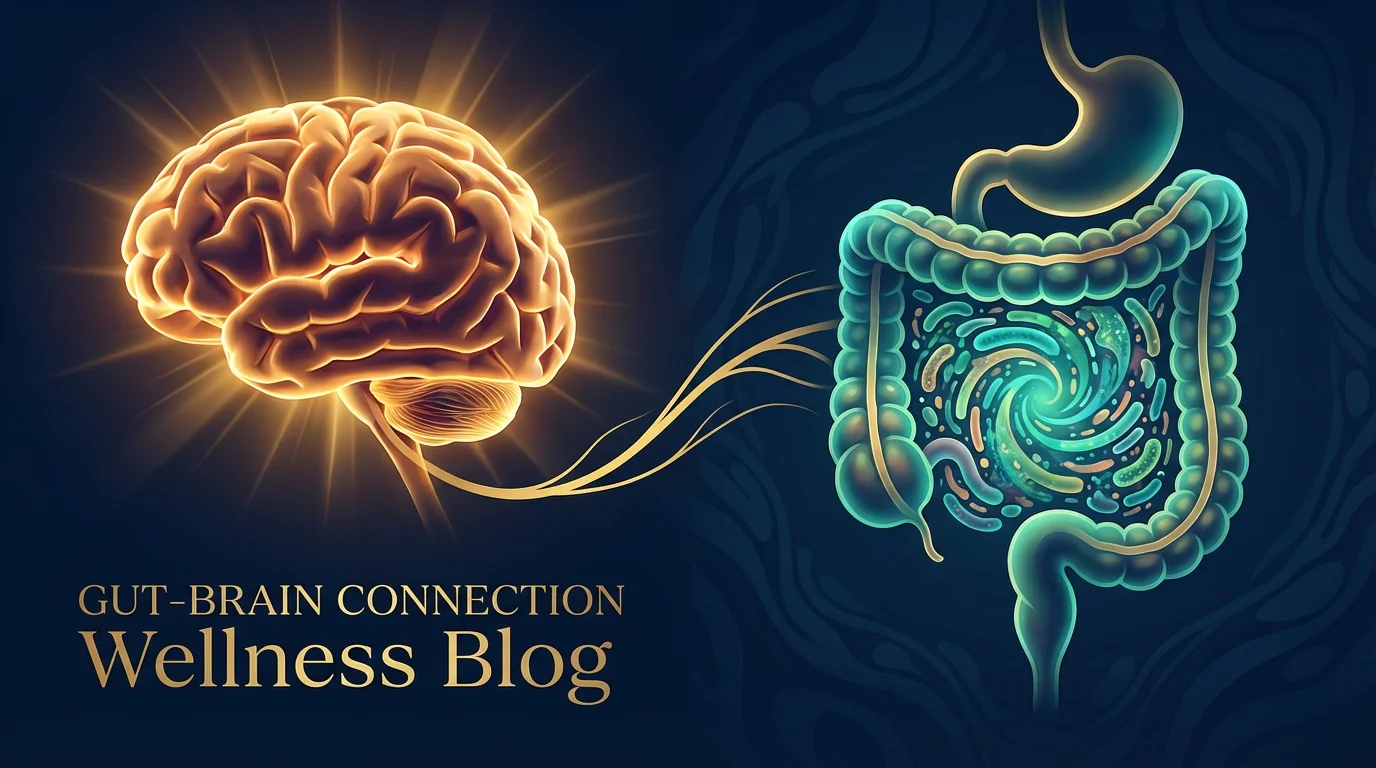
Modern neuroscience has confirmed what Traditional Chinese Medicine understood for millennia: the gut and the brain are in constant, bidirectional communication. The gut contains over 100 million neurons - more than the spinal cord - and produces 90% of the body's serotonin. Disrupted gut function doesn't just cause digestive symptoms; it directly drives anxiety, depression, brain fog, and emotional dysregulation.
TCM mapped this connection long before the discovery of the vagus nerve or the gut microbiome. The clinical implications are profound: treating anxiety and mood disorders through the digestive system - and vice versa - is not alternative medicine. It is one of the most evidence-backed approaches in both ancient and modern medicine.
How TCM Mapped the Gut-Brain Axis 2,000 Years Ago
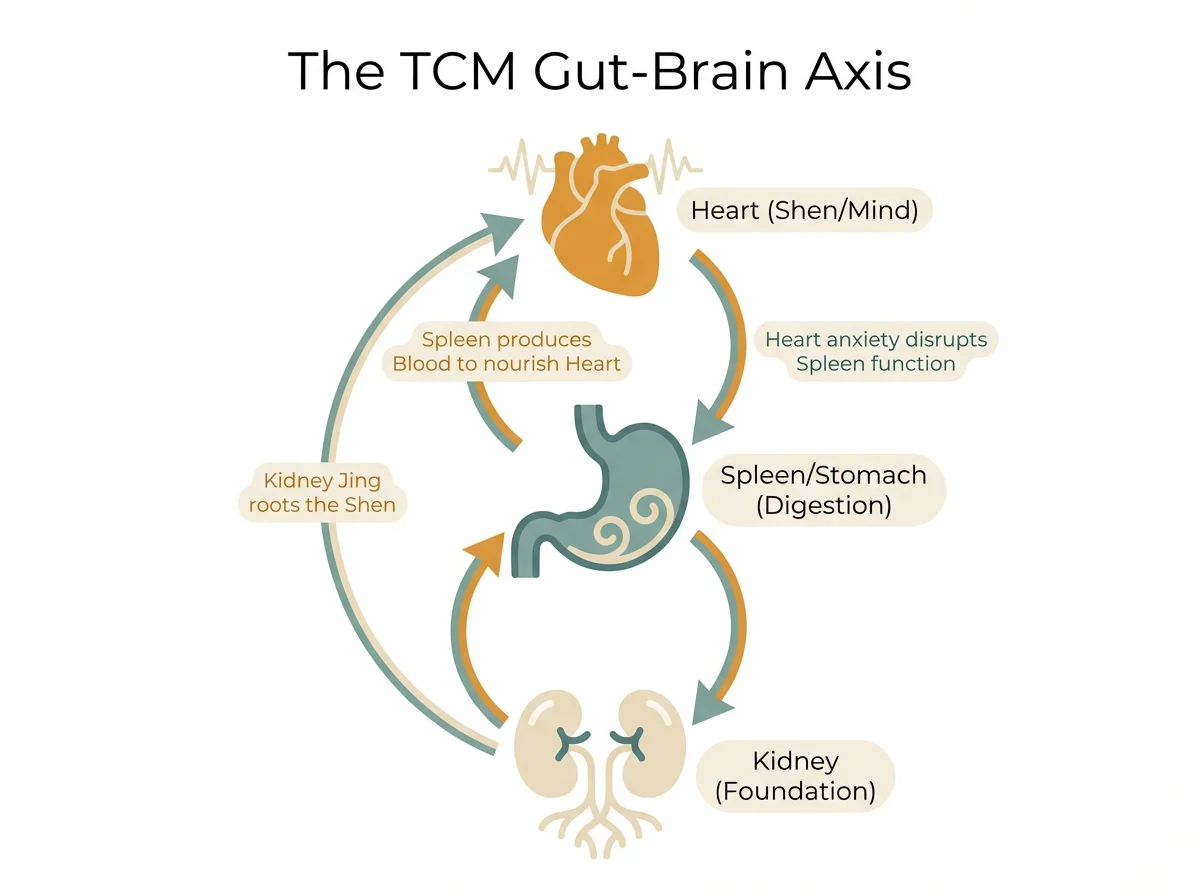
In TCM, the gut-brain connection is explained through three key relationships:
1. The Spleen-Heart Axis: Digestion Produces Blood for the Mind
The Spleen transforms food into Blood and Qi. The Heart uses Blood to house the Shen (mind/spirit). When Spleen function is weak - due to poor diet, irregular eating, or worry - Blood production falls short, the Heart becomes undernourished, and the Shen becomes unstable: anxiety, insomnia, poor concentration, and emotional fragility result. This is TCM's explanation for why poor gut health so reliably co-occurs with mental health challenges.
2. The Liver-Spleen Conflict: Stress Destroys Digestion
In TCM's Five Element framework, the Liver (Wood element, governs stress response) "controls" the Spleen (Earth element, governs digestion). When Liver Qi stagnates from chronic stress, it overacts on the Spleen - directly impairing digestive function. This produces the classic IBS pattern: stress triggers bloating, cramping, alternating constipation and diarrhea. Modern gastroenterology calls this the gut-brain axis; TCM called it "Liver invading Spleen" - and has treated it with the same herbal formula (Xiao Yao San) for over 1,000 years.
3. The Kidney-Heart Axis: Deep Fear and Gut Dysregulation
Chronic fear and existential anxiety deplete Kidney Jing and Kidney Yin. When Kidney Yin is insufficient, it cannot cool and anchor Heart Yang - resulting in Heart Fire rising: insomnia, palpitations, night sweats, and anxiety. Simultaneously, depleted Kidney Yang fails to warm the Spleen, producing chronic digestive weakness, cold abdomen, and loose stools. This is why people with severe anxiety or trauma so often have chronic gut problems: in TCM terms, both share the same root.
The 5 Gut-Brain Imbalance Patterns in TCM
| Pattern | Gut Symptoms | Mental/Mood Symptoms | Root Cause | TCM Treatment |
|---|---|---|---|---|
| Spleen Qi Deficiency with Heart Blood Deficiency | Bloating, loose stools, poor appetite, fatigue after eating | Anxiety, poor memory, insomnia, worry, low mood | Overwork, poor nutrition, chronic worry | Gui Pi Tang, red dates, longan, ST36 acupressure |
| Liver Qi Stagnation Invading Spleen | Stress-triggered bloating, IBS, alternating stools, nausea | Irritability, frustration, mood swings, depression | Chronic stress, emotional suppression, overwork | Xiao Yao San, rose tea, aerobic exercise, LV3 |
| Heart and Kidney Disharmony | Cold abdomen, loose stools, poor digestion, frequent urination | Anxiety, insomnia, night sweats, existential fear | Chronic burnout, trauma, severe stress | Tian Wang Bu Xin Dan + warm Spleen foods |
| Phlegm-Heat Harassing the Heart | Nausea, heavy feeling, acid reflux, excess mucus | Racing thoughts, agitation, nightmares, poor concentration | Poor diet (greasy/sweet), alcohol, accumulated Damp | Wen Dan Tang, reduce dairy/sugar/alcohol |
| Stomach Disharmony with Shen Disturbance | "Stomach not at peace" - fullness, belching, nausea after eating | Cannot sleep after eating, anxiety worse in evenings | Eating while stressed, late heavy meals | Ban Xia Xie Xin Tang, eat before 7 PM, no screens during meals |
The Gut-Brain Diet: What to Eat for Both Systems
| Food | TCM Action | Gut Benefit | Brain/Mood Benefit |
|---|---|---|---|
| Red Dates (Da Zao) | Nourishes Heart Blood, tonifies Spleen Qi, calms Shen | Improves Spleen function, reduces bloating | Reduces anxiety, improves sleep quality |
| Longan (Long Yan Rou) | Nourishes Heart Blood and Spleen Qi, calms Shen | Supports digestive Blood production | Reduces worry and palpitations, improves memory |
| Lotus Seed (Lian Zi) | Tonifies Spleen, nourishes Heart, astringes - stops diarrhea | Reduces loose stools, strengthens gut lining | Calms anxiety, reduces restlessness |
| Poria Mushroom (Fu Ling) | Calms Shen, strengthens Spleen, resolves Dampness | Prebiotic effects, reduces gut inflammation | Reduces anxiety and insomnia, improves cognitive function |
| Sour Jujube Seed (Suan Zao Ren) | Nourishes Heart Blood, calms Shen, strengthens Spleen | Supports gut-brain serotonin pathway | Reduces anxiety, improves sleep onset |
| Chinese Yam (Shan Yao) | Tonifies Spleen and Kidney Qi, nourishes Yin | Prebiotic, repairs gut lining, reduces loose stools | Stabilizes mood by supporting Blood production |
5 Daily Practices for Gut-Brain Health
1. Eat Without Screens or Stress
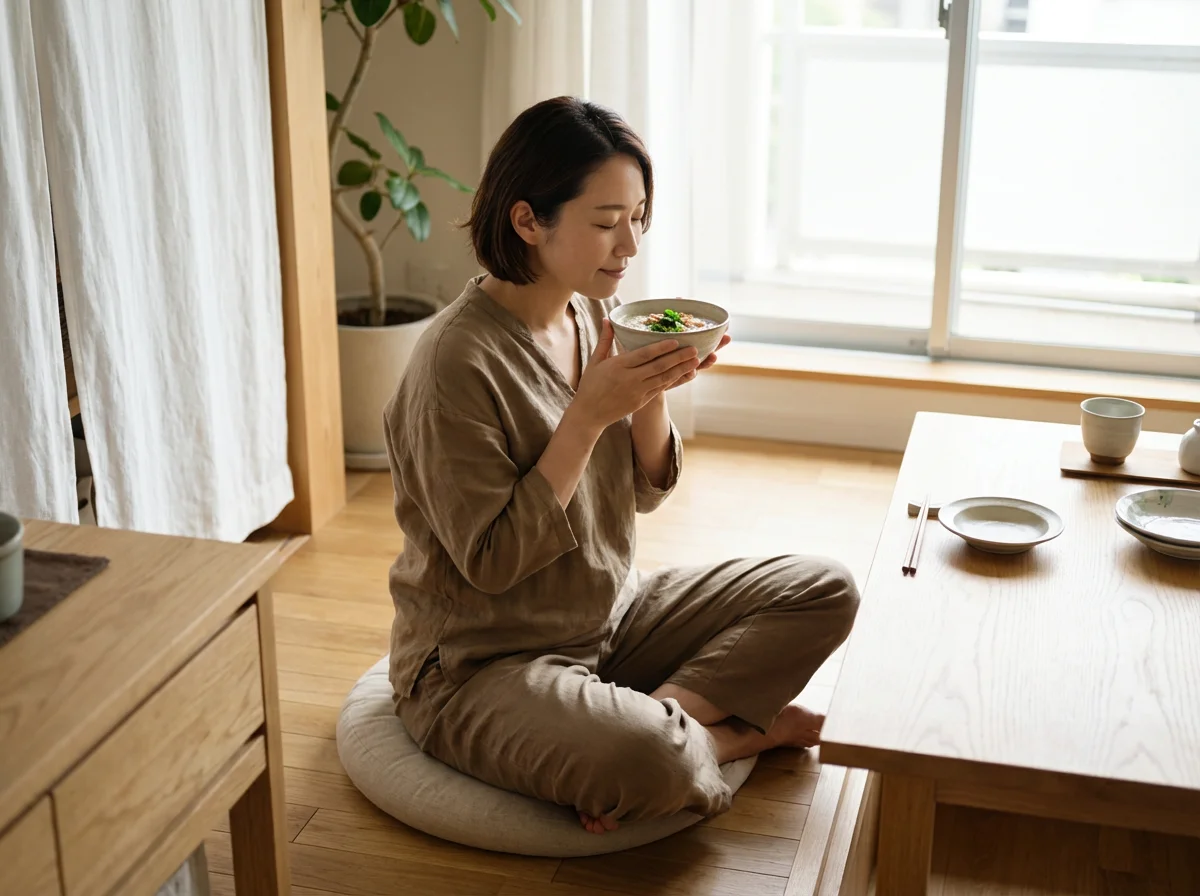
In TCM, the state of mind during eating directly determines how well food is transformed by the Spleen. Eating while anxious, distracted, or angry causes Liver Qi to invade the Spleen mid-meal - producing immediate bloating, poor absorption, and post-meal fatigue. Make meals a deliberate pause: no screens, no work, no difficult conversations. Even 15 minutes of calm eating dramatically improves digestive efficiency.
2. The Morning Gut-Brain Tonic
Simmer together: 5 red dates + 5 longan + 10g lotus seeds + 10g poria mushroom in 2 cups water for 20 minutes. Drink warm every morning before breakfast. This classical TCM formula simultaneously nourishes Spleen, Heart Blood, and calms Shen - addressing both sides of the gut-brain axis in one daily practice. Effects on mood stability and digestive regularity typically emerge within 2 - weeks.
3. ST36 + PC6 Acupressure After Meals
ST36 (Zusanli - 4 finger-widths below kneecap) tonifies Spleen Qi and activates digestive function. PC6 (Neiguan - inner wrist) calms the Heart Shen and reduces nausea. Pressing both points for 90 seconds each after every meal takes 6 minutes total and produces measurable improvements in gastric motility, anxiety levels, and post-meal energy within 2 weeks of consistent practice.
4. The No-Eating-After-7 PM Rule
Evening digestion is when the gut-brain connection is most vulnerable. The Stomach's lowest function hour is 7 - PM. Eating after this window forces the Spleen to work when its Qi is at its nadir - producing incomplete transformation, Phlegm-Damp accumulation, and most critically, disturbing the Shen during its settling period (9 - 1 PM). Late eating is one of the most direct causes of anxious, fragmented sleep.
5. Journaling as Liver Qi Release
Unexpressed emotion - particularly worry, frustration, and grief - stagnates Liver Qi and directly impairs Spleen function. Journaling for 10 minutes before bed (writing uncensored thoughts, frustrations, and intentions for tomorrow) releases Liver Qi stagnation, prevents emotional buildup from disturbing overnight digestion and sleep, and is clinically shown to reduce IBS symptoms and anxiety scores in studies on expressive writing.
Quick Reference: Gut-Brain Health at a Glance
| Question | Answer |
|---|---|
| Why does anxiety cause gut problems? | Liver Qi Stagnation "invades" the Spleen - the TCM mechanism identical to the modern gut-brain axis concept |
| Why does poor digestion cause anxiety? | Weak Spleen produces insufficient Blood - Heart is undernourished - Shen becomes unstable - anxiety and insomnia |
| Best single food for both gut and brain? | Red dates - nourish Heart Blood, tonify Spleen Qi, calm Shen simultaneously |
| Best herbal formula for stress-IBS? | Xiao Yao San - moves Liver Qi, strengthens Spleen, nourishes Blood; the 1,000-year-old IBS formula |
| Most important meal rule? | Eat calmly, without screens or stress - Spleen function drops significantly under psychological stress during meals |
| How long for gut-brain protocols to work? | Dietary changes: 2 - weeks for mood; 3 - weeks for gut. Herbal formulas: 4 - weeks |
Get a personalized TCM gut-brain assessment - identify whether your mood is driving your gut symptoms or vice versa - at Lingcore Health ShenRest and RootNourish.