
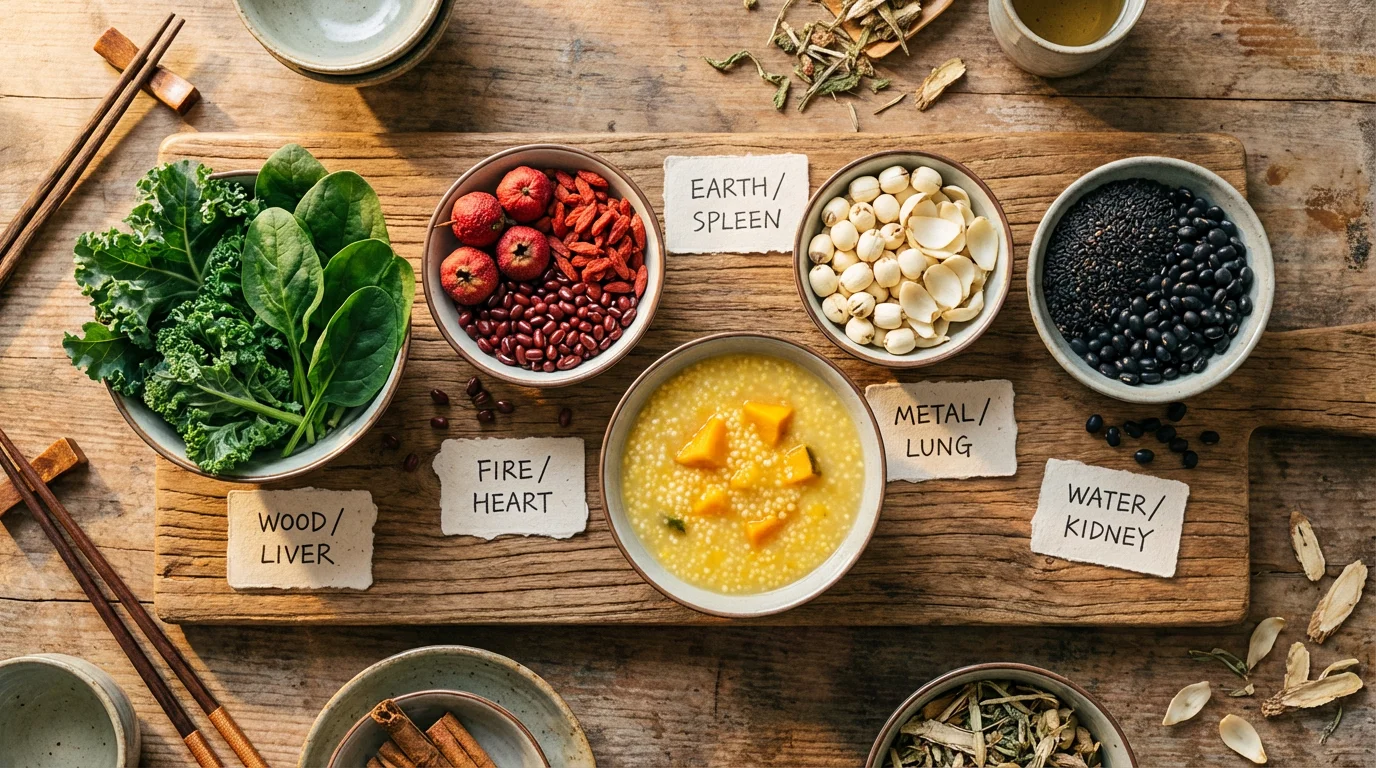
In Traditional Chinese Medicine, food is medicine - and not all food is right for all people. The TCM approach to nutrition is not based on macros, calories, or generic "superfoods." It is based on a deeply personalized system that matches the energetic properties of foods to the specific needs of your body constitution.
This system, refined over 2,500 years of clinical observation, is called Shi Liao ( - ?) - food therapy. It remains one of the most practical and accessible entry points into TCM, requiring no prescriptions or specialist visits - just knowledge of your constitution and the right foods.
The Foundation: TCM Five Elements and Food
TCM food therapy is organized around the Five Elements (Wu Xing) - Wood, Fire, Earth, Metal, Water - each corresponding to an organ system, a flavor, a season, and a color of food that nourishes it.
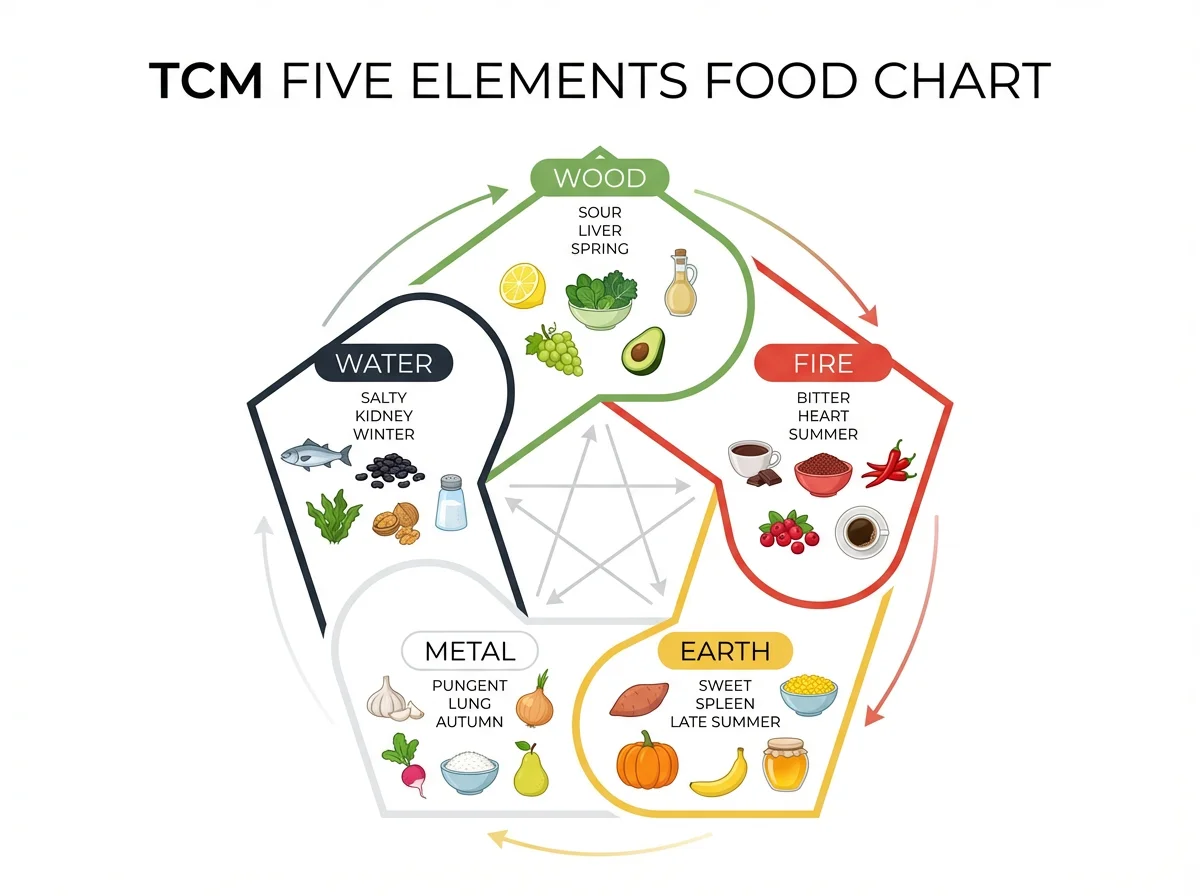
| Element | Organ System | Flavor | Season | Food Color | Key Foods |
|---|---|---|---|---|---|
| Wood | Liver / Gallbladder | Sour | Spring | Green | Leafy greens, sprouts, vinegar, lemon, green onion, liver |
| Fire | Heart / Small Intestine | Bitter | Summer | Red | Red berries, tomatoes, red dates, bitter melon, hawthorn, lamb |
| Earth | Spleen / Stomach | Sweet | Late Summer | Yellow / Orange | Millet, pumpkin, sweet potato, yam, honey, beef, yellow soybeans |
| Metal | Lung / Large Intestine | Pungent | Autumn | White | Pear, white radish, lotus root, lily bulb, tofu, ginger, garlic |
| Water | Kidney / Bladder | Salty | Winter | Black / Dark | Black sesame, black beans, walnuts, seaweed, kidney beans, bone broth |
Eat for Your TCM Body Constitution
Beyond the Five Elements, TCM identifies 9 body constitutions (Ti Zhi). Most people are a blend, but usually have one dominant type. Matching your diet to your constitution is the highest-leverage nutritional intervention in TCM.
| Constitution | Key Symptoms | Best Foods | Foods to Avoid | Signature Recipe |
|---|---|---|---|---|
| Balanced (Ping He) | Good energy, regular digestion, adaptable - the goal state | Varied, seasonal, whole foods | Extremes of any kind | Five-grain congee |
| Qi Deficient | Fatigue, shortness of breath, frequent illness, low voice | Yam, beef, chicken, millet, dates, astragalus (Huang Qi) | Raw/cold foods, excessive exercise | Astragalus chicken soup |
| Yang Deficient | Always cold, cold hands/feet, low libido, loose stools | Lamb, ginger, leeks, walnuts, cinnamon, black pepper | Cold foods, raw fruits, iced drinks | Ginger lamb congee |
| Yin Deficient | Afternoon heat, night sweats, dry mouth, thin build | Lily bulb, pear, duck, tofu, black sesame, tremella mushroom | Spicy, fried, alcohol, caffeine | Tremella and lotus seed soup |
| Phlegm-Damp | Overweight, heavy feeling, foggy head, excess mucus | Job's tears (Yi Yi Ren), red bean, winter melon, lotus leaf | Dairy, sugar, alcohol, greasy foods | Red bean and Yi Yi Ren porridge |
| Damp-Heat | Oily skin, acne, bitter taste, yellow urine, body odor | Bitter melon, mung bean, lotus root, celery, cucumber | Spicy, fried, alcohol, sweets | Mung bean and lotus seed congee |
| Blood Stagnant | Dark under-eyes, varicose veins, fixed pain, dark complexion | Hawthorn, rose petals, black fungus, vinegar, turmeric | Cold foods, excessive sitting | Hawthorn and rose tea |
| Qi Stagnant | Mood swings, bloating, sighing, PMS, tight chest | Rose, jasmine, citrus peel, hawthorn, wheat germ | Alcohol, cold foods, skipping meals | Rose and citrus peel tea |
| Intrinsic Heat | Easy flushing, hot temper, constipation, red face | Watermelon, peppermint, mung bean, tofu, bitter greens | Spicy, fried, lamb, alcohol, ginger | Mung bean soup with peppermint |
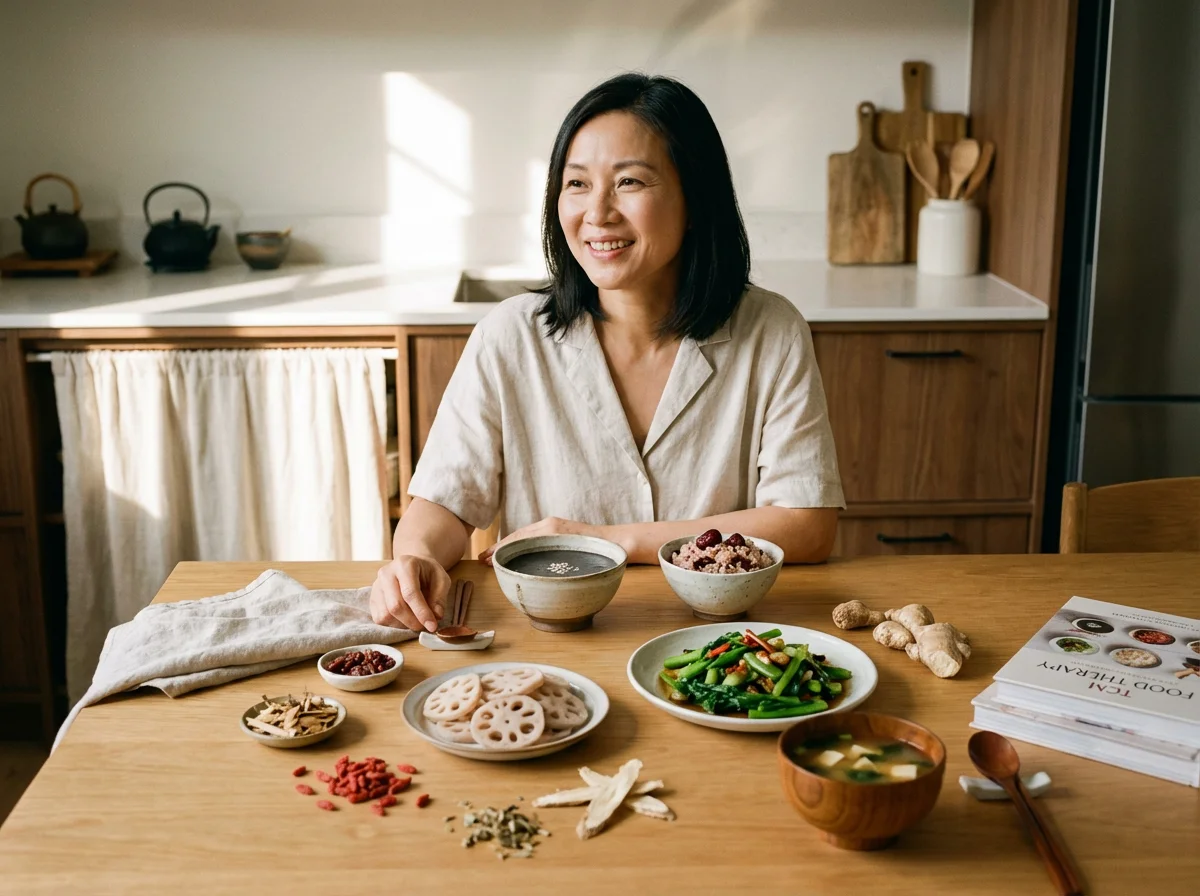
TCM Seasonal Eating: Align with Nature's Rhythm
| Season | Organ Focus | Dietary Principle | Key Foods | Avoid |
|---|---|---|---|---|
| Spring | Liver / Gallbladder | Move Qi, lighten the diet | Sprouts, leafy greens, citrus, vinegar, green onion | Heavy, greasy foods |
| Summer | Heart / Small Intestine | Clear heat, protect Yang | Mung bean, watermelon, bitter melon, lotus leaf tea | Excessive cold drinks, raw seafood |
| Late Summer | Spleen / Stomach | Strengthen digestion, resolve Dampness | Millet, pumpkin, yam, red bean, ginger | Cold, sweet, or raw foods |
| Autumn | Lung / Large Intestine | Moisten dryness, nourish Lung Yin | Pear, white radish, honey, sesame, lotus root | Spicy foods, excessive exercise |
| Winter | Kidney / Bladder | Tonify Kidney, store essence | Bone broth, black sesame, walnuts, lamb, black beans | Cold drinks, raw foods, late nights |
5 Universal TCM Food Rules - For Every Constitution
- Eat warm, cooked foods - The Spleen (digestion) functions best with warm inputs. Raw and cold foods deplete Spleen Yang over time, leading to fatigue, bloating, and dampness accumulation.
- Eat at regular times - The Stomach's peak hour is 7 - AM. A warm, substantial breakfast during this window dramatically improves digestion throughout the day.
- Chew thoroughly - TCM views incomplete chewing as a burden on the Spleen. Aim for 20 - 0 chews per mouthful.
- Don't eat past 70% full - A classical TCM dietary principle: leaving the stomach 30% empty prevents the Spleen from becoming overwhelmed and developing Dampness.
- Eat seasonally and locally - Foods grown in your region and season carry the Qi most relevant to your current environment. This is not just poetic - seasonal produce has higher nutrient density and better energetic alignment with your body's current needs.
Discover your exact TCM body constitution and receive a personalized food therapy plan at Lingcore Health RootNourish - your AI-powered TCM nutrition companion.