
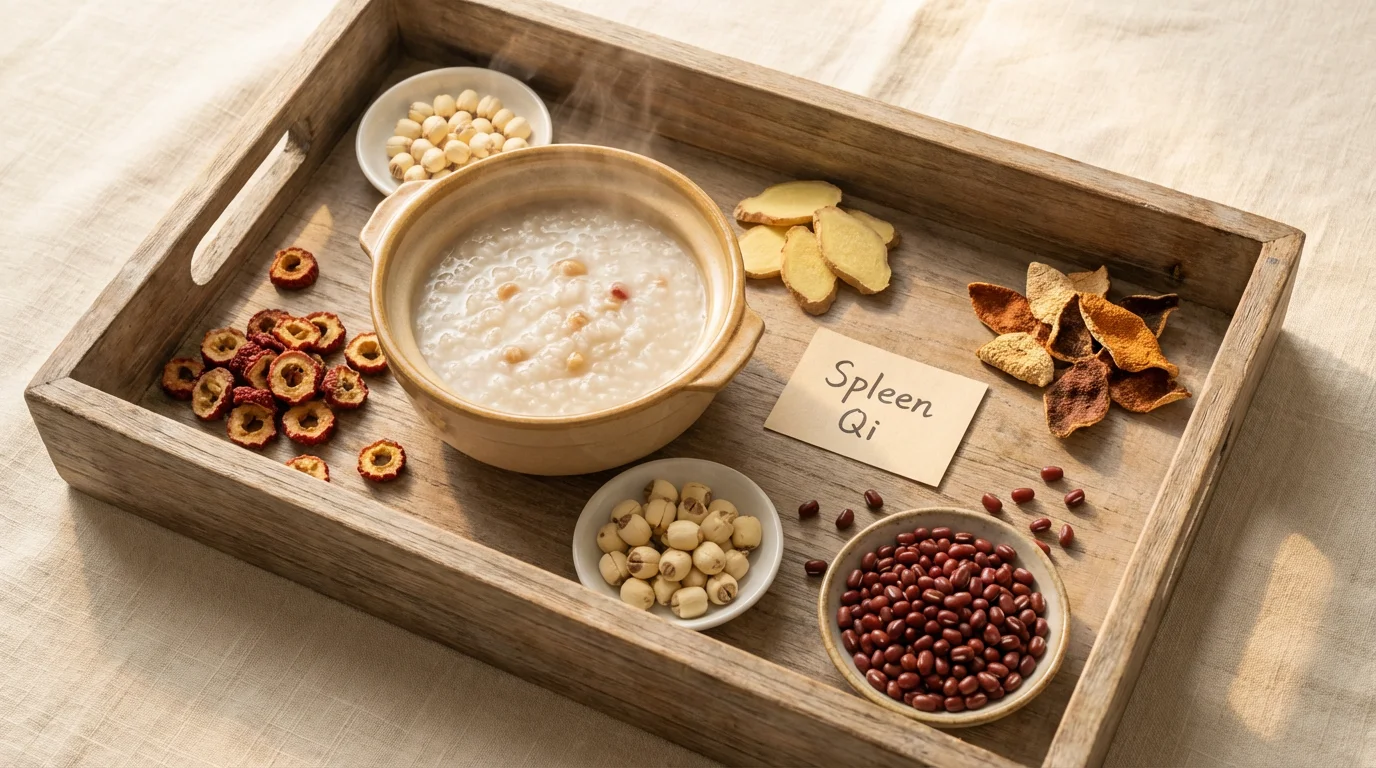
Modern gut health research keeps arriving at the same conclusion: the digestive system is the foundation of overall health. Inflammation, immunity, mental health, hormonal balance, and energy levels all trace back to the gut. Traditional Chinese Medicine arrived at this same conclusion over 2,000 years ago - and built an entire clinical system around it.
In TCM, the digestive system is governed primarily by the Spleen and Stomach organ systems - not the anatomical organs, but functional systems that govern the transformation, transportation, and distribution of nutrients throughout the body. When these systems are healthy, the body is nourished, energized, and resilient. When they are depleted, virtually every other organ system suffers.
The TCM Digestive System: How It Works
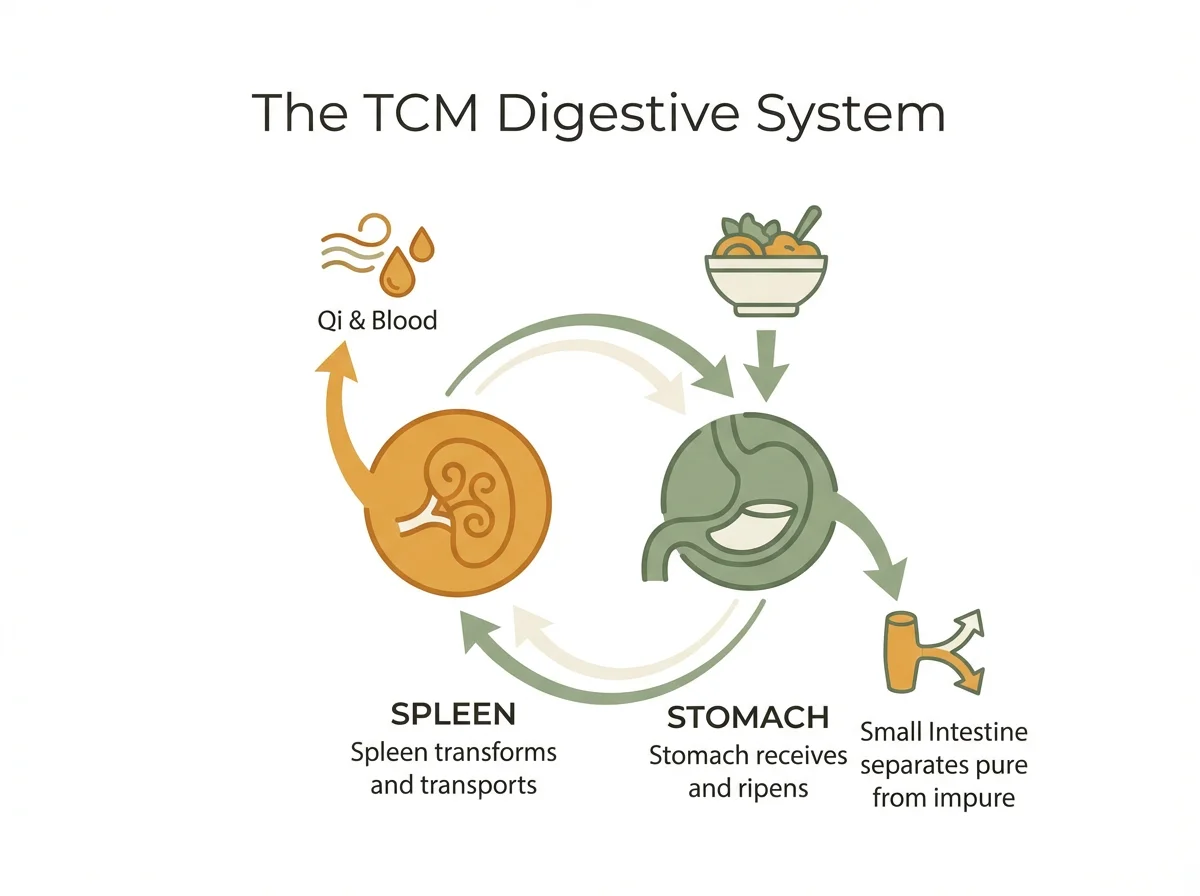
In TCM physiology, digestion is a two-stage process governed by complementary organ pairs:
- Stomach (Wei) - "receives and ripens" food; breaks it down through warmth and churning. The Stomach prefers warmth and moisture; cold and dryness impair its function.
- Spleen (Pi) - "transforms and transports" the refined essence upward to nourish the body, and the turbid waste downward for elimination. The Spleen is the central engine of Blood production and Qi generation.
- Small Intestine (Xiao Chang) - "separates the pure from the impure"; absorbs nutrients, sends waste to the Large Intestine.
- Large Intestine (Da Chang) - governs elimination; dryness here causes constipation, excess Damp causes loose stools.
The 6 TCM Digestive Imbalance Patterns
| Pattern | Key Symptoms | Root Cause | Foods to Eat | Foods to Avoid | Key Herbs |
|---|---|---|---|---|---|
| Spleen Qi Deficiency | Bloating after meals, loose stools, fatigue, poor appetite, pale face | Overwork, irregular eating, worry, cold foods | Millet, yam, pumpkin, beef, red dates, cooked vegetables | Raw food, cold drinks, sugar, dairy | Huang Qi, Dang Shen, Bai Zhu |
| Spleen Yang Deficiency | Cold abdomen, undigested food in stools, cold extremities, aversion to cold | Constitutional weakness, excess cold foods, chronic illness | Ginger, cinnamon, lamb, leeks, walnuts, warm congee | All cold/raw foods, iced drinks, fruit | Li Zhong Wan, Gan Jiang (dry ginger) |
| Stomach Yin Deficiency | Dry mouth, hunger with no appetite, mild nausea, constipation, burning epigastrium | Chronic stress, irregular eating, hot/spicy foods, fever | Pear, lily bulb, lotus root, tofu, duck, congee | Spicy, fried, alcohol, coffee | Mai Men Dong, Sha Shen, Yu Zhu |
| Damp Accumulation | Heaviness, bloating, sticky stools, foggy head, nausea, weight gain | Excess sugar/dairy/alcohol, sedentary lifestyle, humid environment | Yi Yi Ren (Job's tears), red bean, winter melon, lotus leaf, ginger | Dairy, alcohol, sugar, greasy foods | Cang Zhu, Hou Po, Chen Pi |
| Liver Qi Invading Stomach | Stress-triggered bloating, belching, acid reflux, alternating constipation/diarrhea (IBS pattern) | Chronic stress, eating while anxious, emotional suppression | Rose tea, citrus peel, hawthorn, fennel, chamomile | Alcohol, caffeine, cold foods, eating while stressed | Xiao Yao San, Ban Xia Xie Xin Tang |
| Food Stagnation | Fullness and pain after eating, foul belching, bad breath, constipation | Overeating, eating too fast, heavy late-night meals | Hawthorn, radish, barley sprouts (Mai Ya), light soups | Meat, dairy, heavy meals - until resolved | Bao He Wan, Shan Zha (hawthorn) |
TCM Gut Healing: The Daily Protocol
Morning: Activate Spleen Qi
The Stomach's peak hour is 7 - AM. This is the single most important meal window in TCM. Eat a warm, cooked breakfast - congee, millet porridge, or warm eggs - during this window. Avoid coffee on an empty stomach (depletes Stomach Yin) and cold smoothies (suppresses Spleen Yang).
Midday: Main Meal
In TCM, lunch (11 AM - PM, Spleen/Heart hours) should be the largest meal of the day. The digestive fire (Zhong Qi) is strongest at midday. Eating a heavy dinner after 7 PM when digestive fire is low is one of the most common causes of Damp accumulation and bloating in modern lifestyles.
Evening: Light and Warm
Finish dinner by 7 PM. Keep it warm, easy to digest, and small - soups, lightly cooked vegetables, small portions of protein. Add a slice of fresh ginger to evening meals to support Stomach Yang and prevent overnight Damp accumulation.
Daily Abdominal Self-Massage (Fu Bu An Mo)
One of TCM's most effective and accessible gut health practices. After meals, place both hands on the abdomen and rub in clockwise circles (following the direction of bowel movement) for 2 - minutes. This activates Spleen and Stomach Qi, accelerates digestion, and reduces bloating. Clinical studies confirm it reduces IBS symptoms and improves gastric motility.

Top 5 TCM Foods for Gut Health
| Food | TCM Action | Best For | How to Use |
|---|---|---|---|
| Fresh Ginger (Sheng Jiang) | Warms Stomach, disperses Cold, stops nausea | Nausea, cold abdomen, poor appetite | 3 slices in hot water daily; add to all cooked meals |
| Hawthorn (Shan Zha) | Moves food stagnation, aids fat digestion, moves Blood | Bloating after meat/fat, high cholesterol | Hawthorn tea after heavy meals; dried slices as snack |
| Job's Tears (Yi Yi Ren) | Resolves Dampness, strengthens Spleen, clears Heat | Damp accumulation, loose stools, skin issues | Cook with rice or as porridge base; 30g daily |
| Chinese Yam (Shan Yao) | Tonifies Spleen and Kidney Qi, nourishes Yin | Chronic loose stools, fatigue, poor appetite | Steamed, added to congee, or as yam soup |
| Tangerine Peel (Chen Pi) | Moves Qi, dries Dampness, harmonizes Stomach | Bloating, nausea, phlegm, poor digestion | Simmer in teas or soups; 3 - g per serving |
Quick Reference: TCM Gut Health at a Glance
| Question | TCM Answer |
|---|---|
| What governs digestion in TCM? | The Spleen and Stomach - the "postnatal foundation" of Qi and Blood production |
| Most common digestive pattern today? | Spleen Qi Deficiency + Damp Accumulation - caused by stress, cold foods, and irregular eating |
| Single best habit for gut health? | Eat a warm, cooked breakfast before 9 AM during the Stomach's peak hour |
| Why does stress cause gut problems? | Liver Qi Stagnation "invades" the Stomach - the TCM explanation for IBS and stress-triggered bloating |
| Best single gut health food? | Fresh ginger - warms Stomach Yang, stops nausea, aids digestion; use daily |
| How long for TCM gut interventions to work? | Dietary changes: 2 - weeks. Herbal formulas: 4 - weeks for chronic patterns |
Discover your TCM digestive pattern and get a personalized food therapy plan at Lingcore Health RootNourish - your AI-powered TCM nutrition and gut health companion.