

Menopausal Heat? The Kidney-Yin Cooling Protocol for Deep Relief
You wake up in the middle of the night, drenched in sweat. Your heart is racing, your skin feels like it is on fire, and you feel a surge of irritability that seems to come from nowhere. This is the Tidal Wave of Heat. In Traditional Chinese Medicine (TCM), these symptoms are not just "part of getting older"--they are the physical manifestation of a Yin-Yang Imbalance. Specifically, they are a sign that your "Internal Cooling System" (Kidney Yin) is struggling to keep up with the demands of your system. When your Yin is low, the "Yang" (the heat) rises uninhibited, causing the hot flashes and night sweats that disrupt your life. To reclaim your comfort and your sleep, you must learn to rebuild your "Internal Reservoir" and cool the fire from the root.

The Science of the Thermoregulatory Zone: Estrogen, Nitric Oxide, and Yin
To understand the "Kidney-Yin Cooling Protocol," we must look at the science of the Thermoregulatory Zone. In healthy individuals, the brain's "thermostat" (the hypothalamus) has a wide range of temperatures that it considers "normal." Within this range, we don't sweat or shiver. However, when estrogen levels decline, this zone narrows significantly. Even a tiny increase in core temperature can trigger the "emergency cooling response"--the hot flash. In TCM, this narrowed zone is the definition of "Yin Deficiency." The "Internal Reservoir" (Yin) is so low that it can no longer "buffer" the system against small thermal shifts.
Research in Vascular Biology has shown that this narrowed zone is also linked to Nitric Oxide (NO) bioavailability. Estrogen helps the blood vessels produce Nitric Oxide, which keeps them supple and able to regulate heat. As estrogen drops, NO production decreases, and the "Vascular Tone" becomes erratic. This is the physiological basis for the TCM concept of "Rising Yang." By using "Yin-Tonic" foods and the Sanyinjiao (SP6) point, we are essentially helping the body to "re-calibrate" its thermal sensitivity and support its "Vascular Cooling" mechanisms. We are widening the thermoregulatory zone from the inside out.
Advanced Case Study: The "Early-Perimenopause Spark"
Subject: Karen, 46, Corporate Lawyer
Karen was in the early stages of perimenopause. She didn't have full "Night Sweats" yet, but she suffered from "Sudden Flares"--intense bursts of heat and irritability during high-pressure meetings. She felt like her "Internal Fuse" was becoming shorter. In TCM, Karen had "Rising Liver Yang" due to a "Kidney Yin Deficiency." Her "Water" wasn't high enough to keep her "Wood" (Liver) cool.
We introduced the "Dewy Root Infusion" and the "Cooling Bitter Salad" for her lunches. But the key for Karen was the Sanyinjiao Reset--she performed this for 2 minutes before every major presentation. This "anchored" her energy and prevented the heat from rising to her face. Within a month, Karen reported that her "Flares" had almost completely disappeared. She felt "cooler" and more "collected" in high-stakes environments. She had successfully "widened her zone" and reclaimed her professional composure. She was no longer a victim of her "Spark"; she was the master of her "Cool."
The Yin-Yang Thermal Balance Hierarchy
To "Master the Heat," you must address the three levels of thermal regulation.
- Level 1: The Root (Kidney Yin): This is the foundation. By eating Black Sesame and Seaweed, you are providing the "Essence" needed to rebuild the internal reservoir. This is the long-term solution.
- Level 2: The Conductor (The Sanyinjiao Point): This is the "Thermostat Reset." By stimulating the intersection of the three Yin meridians, you are signaling the system to "down-regulate" the heat response and "anchor" the rising Yang.
- Level 3: The Environment (The Thermal Sink): This is the "Surface Support." By using Bamboo Sheets and the Legs Up The Wall pose, you are assisting the body's physical "heat exchange" process, ensuring a cool environment for recovery.
By following this hierarchy, you ensure that your "Internal Climate" is stable, regardless of external or hormonal shifts. You transition from "Managing the Crisis" to "Optimizing the Reservoir."
Advanced Insights: The "Thermoregulatory Zone" and TCM
To understand menopausal heat, we must look at the concept of Empty Heat. In TCM, health is a balance between the cooling, moistening "Yin" and the warming, active "Yang." As we age, our foundational "Kidney Yin" naturally begins to decline. This Yin is like the water in a pot. When the water level is high, the fire (Yang) underneath it stays controlled. However, as the water level drops, the fire becomes "Empty Heat." It is not that you have "too much" fire; it is that you have "too little" water to balance it.
This Empty Heat is "Tidal" by nature--it rises and falls like the ocean. It is most intense in the late afternoon and middle of the night (the Yin times of the day), when the body's cooling system is supposed to be at its peak. Because there is no Yin to "anchor" the heat, it surges upward to the face, chest, and head. This heat "steals" your fluids, leading to dry skin, dry eyes, and the "Brain Fog" that often accompanies menopause. If you do not replenish your Yin, the fire continues to burn, leading to "Bone-Steaming" heat--a deep, internal sensation of being cooked from the inside out.
From a Western perspective, this corresponds with the decline of estrogen and its effect on the "Thermoregulatory Zone" in the hypothalamus. When estrogen levels drop, the hypothalamus becomes hypersensitive to small changes in body temperature, triggering the "emergency cooling response" of vasodilation (the hot flash) and perspiration (the night sweat). By supporting the "Kidney Yin" system, we are essentially helping the hypothalamus to "re-calibrate," widening the thermoregulatory zone and reducing the frequency and intensity of these surges.
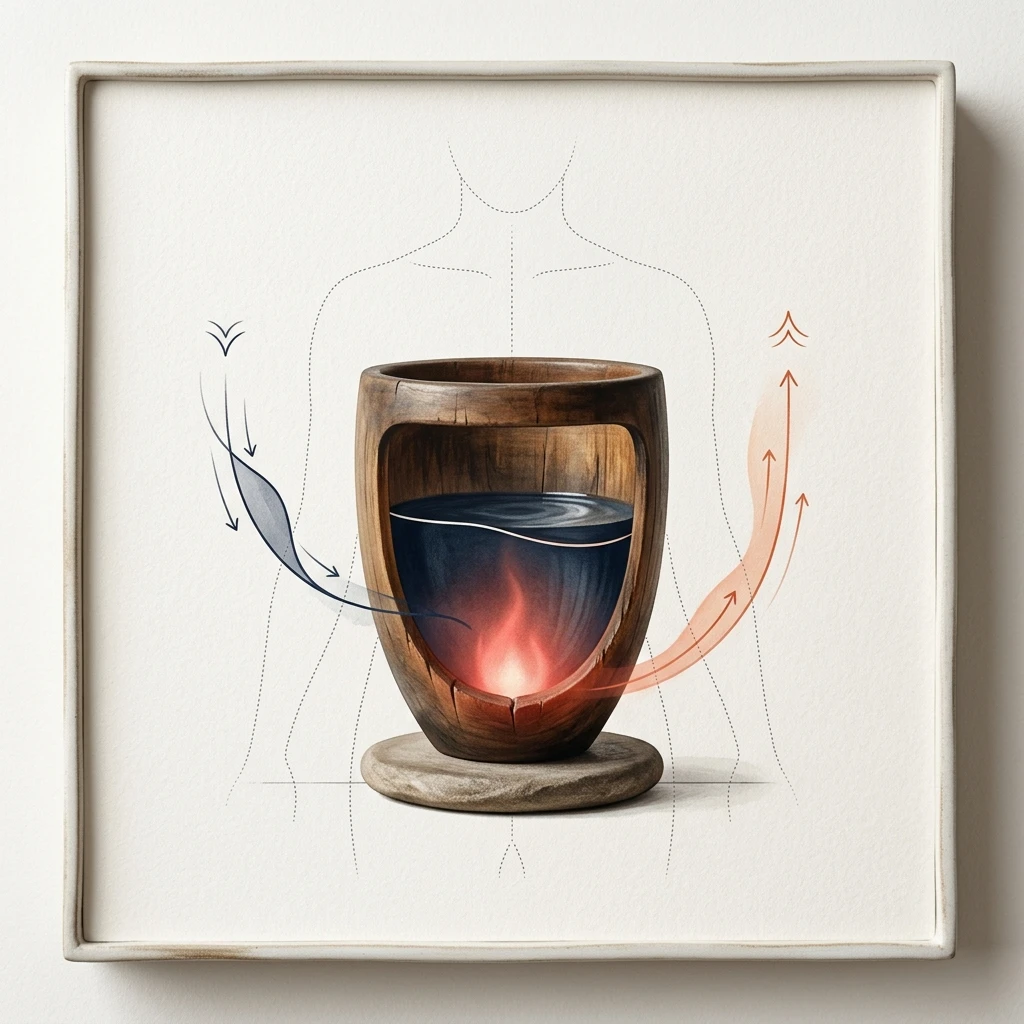
Figure 1: The mechanism of Yin Deficiency and the rise of Empty Heat.
Case Study: Linda and the "Midnight Flare"
Linda is a 52-year-old executive who was suffering from "Midnight Flares." Every night at 2:00 AM, she would wake up in a puddle of sweat, unable to go back to sleep. During the day, she felt "on edge," and her skin had lost its luster. She was using hormone replacement therapy (HRT), which helped slightly, but she still felt "unbalanced." She described herself as "a desert that was occasionally on fire."
Linda's issue was a severe depletion of "Yin Fluids." She was trying to manage the heat without rebuilding the water. We introduced the "Internal Reservoir" protocol, focusing on "Deep-Moistening" foods and specific cooling acupressure points. Within four weeks, Linda's "Midnight Flares" had reduced from 7 times a week to 1. She felt "heavier" in her body (in a grounded, positive way) and reported that her skin was starting to "hold" moisture again. She was no longer just managing the fire; she was rebuilding the garden.
The Organ Clock: The Nighttime Cooling Window
The TCM Organ Clock tells us that the most important window for cooling menopausal heat is between 5:00 PM and 7:00 PM.
- 5:00 PM - 7:00 PM (Kidney Time): This is the time to "Nourish the Root." The Kidney system is trying to draw energy back into the "Internal Reservoir." If you eat a "Heating" meal or engage in high-intensity exercise during this window, you are actively burning off the Yin that you need for the night ahead.
- 1:00 AM - 3:00 AM (Liver Time): This is when the Blood is filtered and the body tries to cool the core. If your Kidney Yin is low, the Heat will rise during this window, causing the 2 AM wake-up call.
By focusing your cooling efforts on the 5-7 PM window, you prevent the Heat from ever reaching the "Tipping Point" that causes the night sweat.
The EssenceHer "Kidney-Yin Cooling" Protocol
This protocol is designed to replenish your internal reservoir and anchor the rising heat.
Phase 1: The "Dewy Root" Infusion (Nutritional Support)
Incorporate "Deep-Yin" foods into your daily routine. This includes Black Sesame Seeds, Seaweed, Mulberry, and Silver Ear Mushroom. These foods are considered "Essence Tonics" in TCM; they provide the raw materials the body needs to rebuild the Kidney Yin. Drink a warm (not ice-cold) infusion of Goji Berries and Chrysanthemum throughout the afternoon. The Goji berries nourish the Yin, while the Chrysanthemum "vents" the Empty Heat from the head and eyes. This is like a "Slow-Drip Irrigation" for your internal desert.
Phase 2: The "Sanyinjiao" Reset (Acupressure Support)
Spend 3 minutes on each leg massaging the Sanyinjiao (SP6) point. Located on the inner leg, four finger-widths above the inner ankle bone, this point is the "Three Yin Intersection." It is the meeting point of the Spleen, Liver, and Kidney meridians. It is the most powerful point in the body for regulating women's health and nourishing Yin. Massaging this point daily acts as a "Cooling Switch" for the entire system, helping to anchor the heat and settle the nervous system before sleep.
Phase 3: The "Thermal Sink" (Sleep Environment Support)
Your sleep environment must act as a "Thermal Sink" to assist your body's cooling efforts. Use bamboo or silk sheets, which have natural moisture-wicking and cooling properties. Before bed, perform 5 minutes of "Legs Up The Wall" (Viparita Karani). This posture allows the "Blood and Yin" to return to the core and the "Heat" to move away from the head. It is a physical way to "empty" the heat from the upper body before you lie down for the night.

Figure 2: The outcome of the Cooling Protocol: Deep rest and a stable internal temperature.
Advanced Techniques for Master Cooling
For those experiencing severe, frequent hot flashes, we can add "Bitter" and "Salty" anchors to the system.
The "Cooling Bitter" Salad
Add bitter greens like dandelion, endive, or radicchio to your lunch. In TCM, the "Bitter" flavor has a downward-pulling action that helps to "Drain the Heat." It clears the "Heart Fire" that often accompanies the "Kidney-Yin" deficiency, reducing the heart palpitations and irritability that make hot flashes so distressing.
The "Salt-Mineral" Foot Soak
In the evening, perform a foot soak with high-mineral sea salt (like Dead Sea or Himalayan salt) but in lukewarm (not hot) water. In TCM, the "Salty" flavor is linked to the Kidney system and helps to "Anchor the Fire." By using lukewarm water, you are drawing the heat out of the head without adding more "Thermal Load" to your system. It is a manual "Heat Exchange" that prepares your body for a cool, uninterrupted night.
Conclusion: From Desert to Garden
Menopause is a second spring--a time of transition and new beginnings. It should not be a time of suffering. By understanding the physiology of "Empty Heat" and nourishing your "Kidney Yin," you transform your internal environment from a parched desert back into a lush, blooming garden. Stop fighting the fire and start rebuilding the water. You have the power to cool your system, stabilize your moods, and reclaim your vitality. Lead your transition with grace, lead with wisdom, and lead with the cooling power of the Yin.
Our EssenceHer AI coach provides personalized hormone-balancing and cooling protocols to ensure your transition is smooth and radiant. By tracking your temperature patterns and symptoms, we provide the specific "Yin-Nourishing" strategy you need for peak comfort. Reclaim your cool today.
>> Unlock Your AI Beauty Coach <<
Medical Disclaimer: The information provided in this article is for educational and informational purposes only and is not intended as medical advice, diagnosis, or treatment. Always seek the advice of your physician or other qualified health provider. For more details, visit our Medical Disclaimer page.