
Hiking This Weekend? Preventing Ankle & Knee Stagnation with the High-Performance TCM Protocol
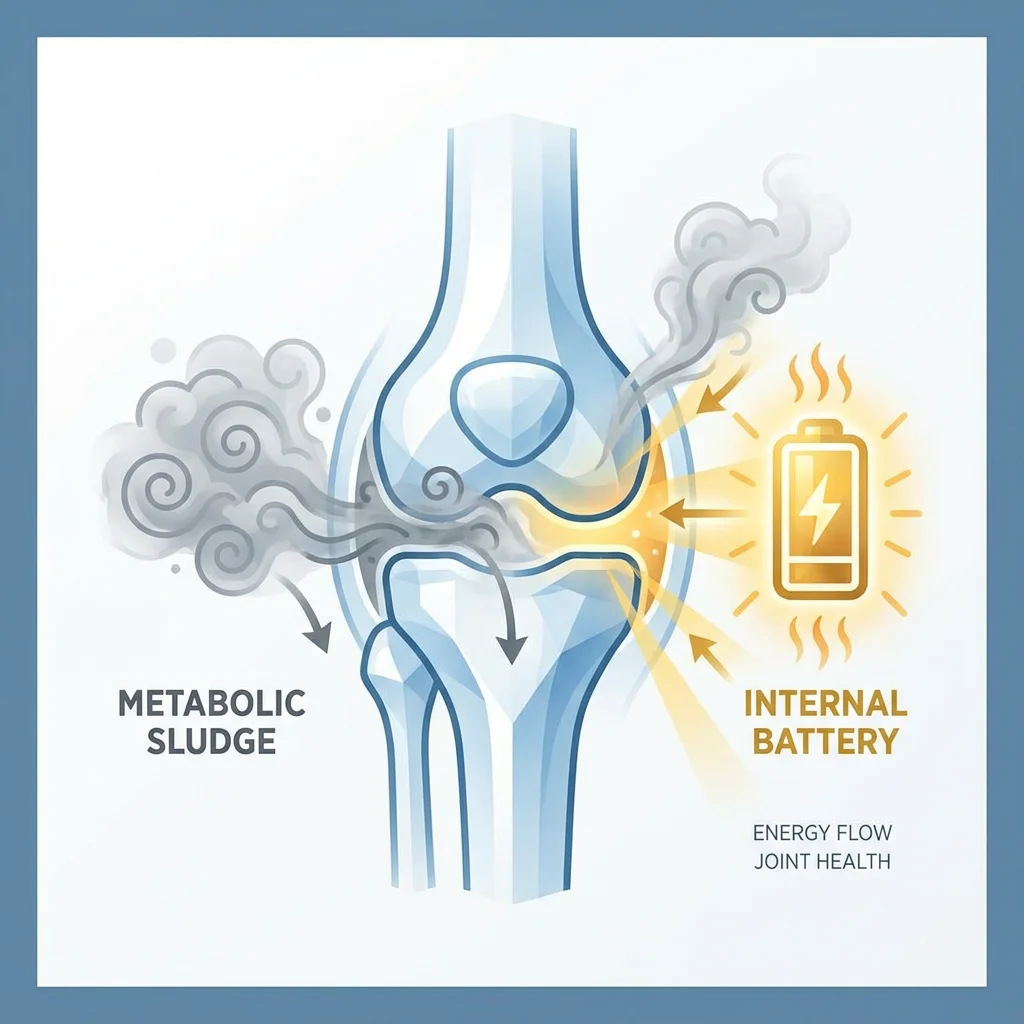
In the world of high-performance trekking, mountain athletics, and professional trail running, the difference between a recovery that takes twenty-four hours and one that lingers for a week often comes down to one thing: your "Internal Battery." In Traditional Chinese Medicine (TCM), we call this Kidney Qi, but for the modern athlete, it is best understood as the foundational energy reserve that powers structural integrity, cellular repair, and fluid dynamics. When you hit the trail, your ankles and knees aren't just mechanical hinges; they are the terminal points of a complex energetic and fluid circuit. If that circuit is clogged with "Metabolic Sludge"—what TCM calls Dampness—or if your "Internal Battery" is running low, those joints will begin to scream long before you reach the summit.

The Bio-Mechanics of the Kidney Battery
To understand joint resilience, we must first understand the role of the Kidneys in Traditional Chinese Medicine. Unlike the Western anatomical view which focuses primarily on filtration, TCM views the Kidneys as the "Root of Life" and the governor of the bones and marrow. This "Internal Battery" provides the "Voltage" required to maintain the density of your skeletal system and the elasticity of your ligaments.
When you are hiking, every step sends a shockwave through your structure. Your Kidney Qi is the stabilizing force that absorbs this impact. If your "Battery" is fully charged, your ankles remain "snappy" and your knees maintain their "buoyancy." However, if you are operating on a low charge—due to chronic overwork, lack of deep sleep, or poor nutrition—the body begins to pull energy away from the periphery to protect the core. This leaves the ankles and knees vulnerable to what we call "Structural Leaks."
The terminal point of the Kidney meridian, the "Gushing Spring" (KI1), is located on the sole of the foot. This is your primary grounding point. When you hike, you are effectively "pumping" energy from the earth through this point. If your footwear is too tight or your gait is compromised, this pump fails, leading to a rapid depletion of your internal reserves.
Metabolic Sludge: The Friction in Your Joints
The second major factor in trail-induced joint pain is "Metabolic Sludge," known in TCM as Dampness. Think of Dampness as a form of physiological molasses. It is heavy, sticky, and gravitates toward the lowest points of the body—namely, the ankles and knees.
During a long hike, your muscles produce metabolic byproducts like lactic acid and cellular debris. In a high-functioning system, the "Nutrient Delivery Flow" (Blood and Qi) moves these wastes out of the joint capsules and into the "Primary Filtration Line" (The Bladder and Kidney systems). However, when the "Internal Battery" is weak, it cannot generate enough "Heat" to keep these fluids moving. The result is "Bio-Sludge" that settles into the synovial fluid of the joints.
This sludge creates "Kinetic Friction." You feel it as a "heavy" sensation in the legs, a "clicking" in the knees, or a "stiffness" in the ankles that makes you feel like you're moving through mud. This isn't just muscle fatigue; it is a fluidic stagnation that, if left unaddressed, leads to chronic inflammation and long-term joint degradation.
Empathy/Case Study: The Weekend Warrior's Tuesday Crash
Meet Alex. Alex is a 34-year-old software engineer and a passionate weekend hiker. Last Saturday, Alex tackled a challenging 15-mile trail with a 3,000-foot elevation gain. During the hike, he felt invincible. The adrenaline was pumping, his "Central Command" (Shen) was focused, and he felt he could go for miles. However, by Monday morning, Alex could barely navigate the stairs in his home. His knees felt "heavy" and "sticky," and his ankles had lost their snappy responsiveness.
Alex's mistake wasn't the distance or the elevation. His mistake was a failure to account for "Metabolic Sludge" accumulation. During high-intensity descents, the impact forces on the knees and ankles are three to five times body weight. If the "Internal Battery" is depleted, the body's ability to "flush" the metabolic byproducts of this stress is severely compromised. By Sunday night, that "Bio-Sludge" had settled into the joint capsules of his knees and ankles, creating what we call "Kinetic Friction."
Alex's "Tuesday Crash" is a classic example of structural stagnation. His joints were physically fine—no tears or fractures—but they were energetically and fluidically "jammed." He described the sensation as "moving through mud." This is the physical manifestation of Damp-Cold Stagnation. By implementing the High-Performance Protocol, Alex was able to return to the trails the following weekend with a 40% faster recovery rate and zero Monday morning stiffness.
The Organ Clock: Timing Your Recovery
The TCM Organ Clock is a sophisticated bio-rhythm map used to optimize human performance. The "Internal Battery" (Kidney) and its partner, the Bladder (The Primary Filtration Line), are at their peak performance between 3:00 PM and 7:00 PM.
- 3:00 PM - 5:00 PM (Bladder): This is the body's "Main Drain" window. The Bladder channel is the longest meridian in the body, running from the eyes to the pinky toe. It is responsible for the final "Sludge Flush" of the day.
- 5:00 PM - 7:00 PM (Kidney): This is the "Battery Charging" window. This is when the body begins to store energy for the next day's efforts.
If you are still pushing hard on a descent during these hours without proper protocol, you are effectively "short-circuiting" your recovery. Most hikers finish their day during this window, making it the most critical time to transition from "Load" to "Flush."
Multi-step Protocol: The KineticQi Joint Resilience Map
This protocol is designed in three distinct phases to maximize your "Internal Battery" output and minimize "Kinetic Friction."
Phase 1: Pre-Hike "Battery Loading"
Before you put on your boots, you must ensure your "Internal Battery" is fully charged.
- Acupressure Grounding: Spend 5 minutes massaging the "Taixi" point (KI3), located in the hollow between the inner ankle bone and the Achilles tendon. This "plugs" your system into its deepest energy reserve.
- Thermal Priming: Keep your lower back (the "mansion" of the Kidneys) warm. Avoid sleeping in a cold room with your legs exposed. Cold "constricts" the flow, making joints brittle.
- Kinetic Priming: Perform 30 slow, controlled ankle rotations in each direction to break up any "Morning Sludge" before it hardens.
Phase 2: Mid-Hike "Sludge Flush"
Between 3 PM and 5 PM, your Bladder channel is most active. Use this window to optimize filtration.
- Hydration with Intention: Add electrolytes (Sodium, Potassium, Magnesium) to your water. Plain water can "dilute" your battery voltage.
- The "Gate" Release: Every 45 minutes of descending, stop for 60 seconds. Perform gentle knee circles to prevent sludge from settling in the popliteal fossa (back of the knee).
- Elevation Breaks: If you stop, elevate your feet above your heart for 3 minutes to assist the "Nutrient Delivery Flow" in returning to the core.
Phase 3: Post-Hike "Thermal Reset"
This is the most critical phase for preventing Monday morning stiffness.
- The Magnesium "Anchor": Soak your feet and calves in warm water (102-104F) with 2 cups of Epsom salts. The warmth "dilates" the channels to move "Sludge," while the magnesium "grounds" the nervous system.
- Targeted Friction Removal (Gua Sha): Use a foam roller or a smooth tool on the calves and IT bands. Move the stagnant fluids upward toward the lymph nodes in the groin.
- Kidney Support Nutrition: Eat "dark" meals (black beans, seaweed, walnuts) to replenish the battery. Avoid ice-cold drinks, which "shock" the Kidney system.

Advanced Techniques for Elite Hikers
For those pushing the absolute limits of mountain performance, additional layers of TCM strategy can provide a significant edge.
Strategic Nutrition for the Kidney Battery
In TCM, the "Essence" (Jing) stored in the Kidneys is the ultimate source of physical stamina. To nourish this essence, one must consume foods that match the "Water" element.
- Black Foods: Black sesame seeds, blackberries, and black rice are considered "tonics" for the Kidney system.
- Sea Minerals: Seaweed and kelp provide the essential salts that maintain the "Electrolytic Voltage" of the internal battery.
- Bone Broth: Rich in collagen and marrow, bone broth directly supports the "Governorship of Bones" that the Kidneys provide.
The Psychology of the "Will" (Zhi)
The Kidneys are said to house the "Zhi," or the "Willpower." When your Kidney Qi is strong, your mental resolve on the trail is unshakable. When it is depleted, you feel a sense of "dread" or "fear" during challenging sections. By maintaining your "Internal Battery," you are not just protecting your joints; you are fortifying your mental resilience for the most demanding peaks.
Conclusion: The Efficiency of the Reset
High performance isn't just about how hard you can push; it's about how efficiently you can reset. By following the KineticQi protocol, you are actively managing the bio-mechanics of your recovery. You are clearing the "Sludge" and recharging the "Battery" so that Tuesday feels just as energized as Saturday.
Stop treating your joints like mechanical parts and start treating them like the high-performance energetic circuits they are. Your next summit depends on the "Internal Battery" you charge today.
Ready to dive deeper?
>> Unlock Your KineticQi AI Coach Today <<
Medical Disclaimer: The information provided in this article is for educational and informational purposes only and is not intended as medical advice, diagnosis, or treatment. Always seek the advice of your physician or other qualified health provider. For more details, visit our Medical Disclaimer page.